It is 11 PM on a Tuesday. Someone has finally sat down after a long day to deal with the thing they have been putting off: booking a consultation, getting a quote, asking whether you can help. They find your website, they reach out, and nobody answers.
What happens next decides whether that person becomes a customer. Some will leave a message and wait. Many will simply try the next business on the list, and the next one might answer.
This post looks at that moment honestly. We compare the three common ways businesses handle out-of-hours enquiries (voicemail, an answering service and an AI voice agent), walk through what Cypher V, the Cypher LM voice agent, does with a late-night caller, and show what your team finds when it arrives in the morning.
Why the late-night enquiry matters
People do not keep business hours when they make decisions. The hours after work and after the children are asleep are often the only time people have to research, compare and reach out. For many service businesses, a real share of enquiries arrive when the office is closed.
Those enquiries are also unusually valuable. Someone who reaches out at 11 PM has usually already decided they need help. They are not browsing; they are trying to get something done. If they can get it done with you, right then, they have little reason to keep looking.
The problem is timing. A lead that waits until morning is a lead that has had eight hours to change its mind, find someone else or forget. Even a fast callback at 9 AM arrives after the moment of intent has passed.
You do not need statistics to see this in your own business. Look at when your enquiries arrive, and at how many of the people who left a message after hours actually became customers. For most teams, the gap is uncomfortable.
There is also a quieter cost. The customers who do wait until morning arrive with less patience and more alternatives. Your team spends the first hour of the day chasing people who have already moved on, instead of serving the ones who are ready. After-hours handling is not only about the night; it shapes how the next working day starts.
Option one: voicemail
Voicemail is the default. It costs nothing extra and it captures something. But it asks the caller to do all the work, and gives them nothing back.
A voicemail cannot answer a question. It cannot tell a caller whether you offer the service they need, what it costs, or when you could fit them in. It asks them to wait an unknown amount of time for a call that may come while they are busy. Many callers hang up rather than leave a message at all.
For the business, voicemail creates a morning backlog. Someone has to listen to every message, decode names and numbers, work out what each caller wanted and call them back, often reaching a voicemail of their own. The information that arrives is whatever the caller remembered to say.
Voicemail still has a place for personal lines and for businesses with very few after-hours calls. As a sales channel, it is the weakest option.
There is a subtle reputational cost as well. A caller who reaches voicemail at a business that advertises fast service notices the gap between the promise and the experience. That impression lingers even if your callback the next day is excellent.
Option two: an answering service
An answering service puts a person on the line. That is a real improvement: callers hear a human voice, and the service can take a structured message and sometimes book into a calendar.
The limits come from the fact that the person answering does not work for you. They are typically working from a short script across many businesses. They can tell a caller your hours and take their details, but detailed questions about your services, your prices or your policies usually end with "someone from the office will call you back".
Quality varies by shift and by operator, and costs usually rise with call volume. Messages arrive by email or in a portal, and your team still has to read, interpret and act on each one.
An answering service is a reasonable choice when callers need to hear a person, or when the main job is to take messages. It is less suited to answering detailed questions or completing a booking in one call.
It is also worth asking what happens during your busiest hours. An answering service is usually staffed for an average night, not for the evening your advert goes out or the weekend after a storm. When several people call at once, someone still waits.
Option three: an AI voice agent
An AI voice agent answers immediately, at any hour, and works from your own knowledge: your services, prices, policies and FAQs. It can answer the questions callers actually ask, collect their details and, where you allow it, complete the next step during the call.
The difference from voicemail is that the caller gets something back. The difference from an answering service is that the agent knows your business in depth and behaves the same way on every call, at 11 PM on a Tuesday and at 3 PM on a Friday.
An agent is not right for every conversation. Sensitive, complex or high-stakes discussions still belong with your team. The agent's job after hours is to handle the questions it can answer, capture everything your team needs, and make the morning callback easy.
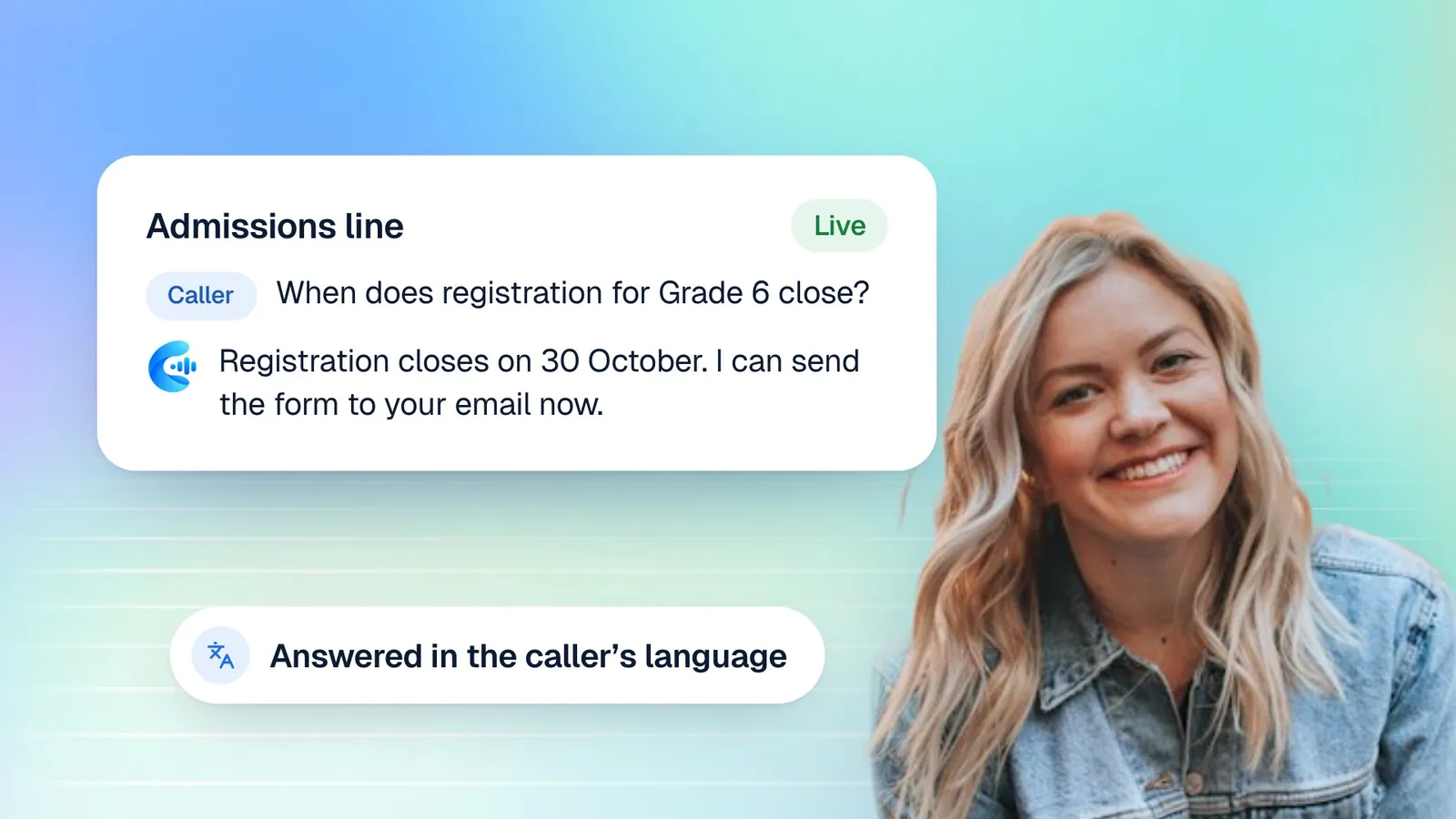
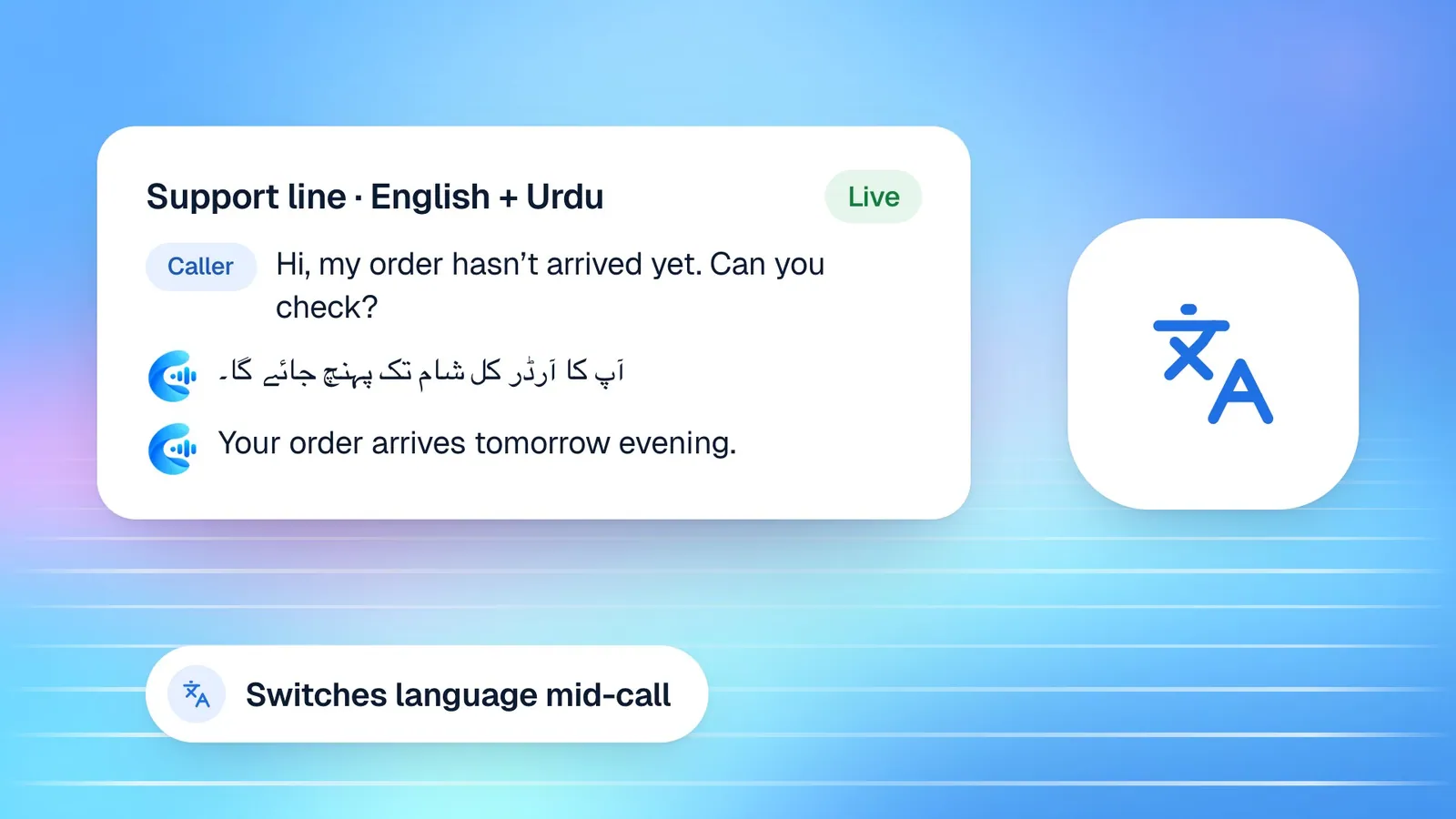
It also speaks the way your customers do. A Cypher LM agent can be built for English, Urdu or both, and a bilingual agent follows callers who switch languages mid-sentence, which matters for any business serving customers in Pakistan.
Side by side: voicemail, answering service and Cypher V
Here is how the three options compare on the things that decide whether a late-night enquiry becomes a customer.
| Voicemail | Answering service | Cypher V voice agent | |
|---|---|---|---|
| Answers at 11 PM | Recording only | Yes, by an operator | Yes, immediately |
| Answers detailed questions | No | Usually limited to a script | Yes, from your knowledge base |
| Books an appointment on the call | No | Sometimes | Yes, with Cypher S switched on |
| Takes a payment or deposit | No | Rarely | Sends a secure payment link with Cypher P switched on |
| Speaks English and Urdu | No | Depends on the service | Yes, English, Urdu or both |
| What your team gets in the morning | Audio messages to decode | A typed message | Transcript, summary, action items and a follow-up draft |
| Consistency | Not applicable | Varies by operator | Same knowledge and behaviour on every call |
The right choice depends on your business, but for enquiries that are mostly questions, quotes and bookings, the voice agent is the only option that can resolve the call instead of deferring it.
What Cypher V does with an 11 PM caller
Let us follow a late-night enquiry from start to finish. Imagine a home-services company. A homeowner visits the website at 11 PM and presses the call button on the Cypher LM website widget.
- The agent answers straight away, with your greeting, in English or Urdu depending on how the caller speaks.
- It answers their questions from your knowledge base: whether you cover their area, what an inspection includes, how pricing works.
- It captures their details, such as name, phone number and email, as they come up naturally in the conversation.
- It books the next step. With Cypher S on, the agent checks your real availability and books an inspection before the call ends. The booking goes into your Google Calendar, and the customer receives a confirmation email.
- It takes a deposit if you want one. With Cypher P on, the agent can send a secure payment link to the caller's screen or email during the call.
- It wraps up clearly, repeating the key details so the caller knows exactly what happens next.
If the caller asks something outside the agent's knowledge, or wants to speak to a person, the agent follows the fallback you set: for example, telling them the team will follow up first thing in the morning. That open question shows up in the recap, so it does not get lost.
If the caller's connection drops, they can reconnect to the widget within about 25 seconds and the agent carries on the same conversation.
Throughout the call, the agent stays inside the boundaries you set. It does not quote prices that are not in your knowledge base, it does not book outside your availability, and it avoids the topics you tell it to avoid. That predictability is what makes it safe to leave the line open overnight.
The caller's experience is the part that matters most. Instead of a beep and a promise, they finish the call with an answer, a confirmed time and an email in their inbox. For many people, that is the moment they stop comparing and decide to go with you.
What your team finds the next morning
The real test of any after-hours setup is the first hour of the next working day. Here is what your team sees with Cypher LM.
A recap of every call
With the recap email automation on, you receive an email after every call. In the dashboard, Calls › Recaps holds each call's summary, key points, action items and a drafted follow-up, along with the full transcript and recording. Nobody has to listen to audio to know what happened.
Bookings already in the calendar
Any appointment booked overnight is already in Bookings and in your Google Calendar, with the customer added as an attendee and a Google Meet link for video appointments. Your team does not need to call anyone back to arrange a time.
Follow-ups that are ready to send
Each recap includes a follow-up draft. Review it, adjust it if you like, and send it by email from the recap; when Gmail is connected, it goes from your own inbox. Action items from calls collect in the Follow-ups tab, and an optional daily digest emails you what is due each morning.
Context for every callback
When a person does need to call back, Cypher M prepares a brief from every call that customer has had with your agent: what they wanted, what was promised and what is still open. The callback starts with context instead of "So, how can I help?".
Contacts that build themselves
Callers who share a phone number or email are added to Contacts and grouped together, so a customer who called at 11 PM and again the next afternoon appears as one person with one history. When you open their contact, every call, booking and follow-up is in one place.
How this works in Cypher LM
Setting up an after-hours line takes an afternoon, most of which is writing good knowledge files.
- Build Cypher V in the setup wizard: your website, business details, language and the agent's identity.
- Add knowledge: services, prices, coverage areas, policies and your FAQ. See our guide to writing a knowledge base your agent can use.
- Switch on skills: Cypher S to book appointments and Cypher P to request payments during the call.
- Deploy the widget on your website. Phone numbers are connected by our team on request if you want callers to ring a number too.
- Turn on automations: a recap email after every call, booking confirmations and reminders, and the daily follow-up digest.
Frequently asked questions
Will callers know they are talking to an AI agent?
The agent introduces itself with the name and greeting you choose. We recommend being straightforward that it is your business's assistant. Most callers care far more about getting a clear answer than about who gives it.
What if the caller wants a person?
Set a fallback in the agent's behaviour settings, such as promising a callback first thing in the morning. The request appears in the call recap and in your follow-ups, so your team can act on it at the start of the day.
Can the agent book appointments outside working hours?
The agent books into the availability you set in Cypher S. A caller can book at 11 PM for a slot during your working hours the next day or later. It never books outside the hours you allow.
Does this work on my phone line or only on my website?
The website widget is the main channel and works today. Phone numbers are connected by our team on request, in Pakistan, the United States and the United Kingdom among others.
How quickly can we go live?
Most businesses build and test an agent in under an hour. The time that matters most is spent writing clear knowledge files and testing real questions before customers call.
Conclusion: answer the moment, not the morning
The late-night enquiry is not a nuisance to be managed. It is often the most motivated customer you will hear from all week. Voicemail asks that customer to wait; an answering service takes their message; an AI voice agent can answer them, book them and send your team everything it needs for the morning.
Look at when your enquiries arrive and what happens to them after hours. If the answer is "they wait", that is the place to start.
A useful first step is a one-week experiment. Put the agent on your website for evenings and weekends, keep your existing daytime process unchanged, and compare the recaps from that week with the voicemails from the week before. The difference is usually clear without any reporting.
Start a free trial to build an agent and test it with your own after-hours questions, or book a demo to see a late-night call, and the morning recap, end to end.