Listen to any customer line in Pakistan for ten minutes and you will hear it: a caller starts in English, switches to Urdu to explain the problem, drops in an English product name, and finishes with a question in whichever language comes first. Nobody thinks of it as switching languages. It is simply how people talk.
Most automated phone systems were never built for that. They ask the caller to choose a language up front, and then fail the moment the caller does not stick to it. The result is repeated questions, frustrated callers and staff who end up answering the calls anyway.
Cypher V, the Cypher LM voice agent, can be built to speak English, Urdu or both. This post explains what a bilingual agent actually does on a call, where it makes the biggest difference (schools, helplines, clinics and shops), how to set one up, and where the current limits are, so you can plan around them.
How people really speak on support calls
Code-switching, moving between two languages within a conversation or even a sentence, is normal for bilingual speakers. It is not a sign that a caller is confused. Often the technical words are easier in English ("my order number", "the invoice", "the app") while the explanation is more natural in Urdu.
A support line that forces one language adds work for the caller at the worst possible moment. Someone calling about a delayed delivery or a sick child does not want to translate their own thoughts. They want to be understood the first time.
There is a relationship cost too. Customers notice when a business speaks the way they do. A line that answers naturally in Urdu, and follows the caller back into English without fuss, feels like a business that knows its customers. One that insists on a single language feels like a system.
That is why language is not a cosmetic setting. For many businesses, it decides whether the agent can handle the call at all.
Consider what happens on a typical support call when the line only works in one language. The caller struggles to describe the problem, the system mishears a key word, and the conversation loops back to the start. Even when the caller eventually gets through, they remember the effort, not the answer. Multiply that by every call in a week and language becomes one of the biggest drivers of customer satisfaction you control.
What a bilingual voice agent does differently
When you choose English + Urdu in the Cypher LM setup wizard, the agent is configured with multilingual speech recognition and a multilingual voice. In practice, that means three things on a live call.
It understands both languages in the same call
The agent does not need the caller to pick a language. Whether the caller speaks English, Urdu or a mix, the agent transcribes and understands what was said. A sentence that starts in one language and ends in the other is handled as one sentence.
It answers naturally in the caller's language
The agent replies in the language the caller is using, and can follow a switch mid-conversation. If a parent begins in Urdu and then reads out an English reference number, the agent keeps the conversation flowing instead of stopping to ask which language to use.
It keeps the same knowledge in both languages
Your knowledge base does not need to exist twice. The agent answers from the same price lists, policies and FAQs whichever language the caller uses. Many businesses keep their documents in English and let the agent answer in Urdu when the caller prefers it. We recommend testing your most important answers in both languages before going live, especially prices and dates.
Choosing English, Urdu or both
The wizard offers three options, and each is the right choice for some businesses.
| Language setting | Best for | What callers experience |
|---|---|---|
| English only | Businesses whose customers speak English on the phone, including international callers | Clear English transcription and an English voice |
| Urdu only | Audiences who speak Urdu on the phone and rarely use English | Urdu transcription and a natural Urdu voice |
| English + Urdu | Most businesses serving customers in Pakistan, and diaspora audiences | The agent understands and replies in either language, and follows switches mid-call |
If your customers are in Pakistan, English + Urdu gives you the widest reach, because you cannot predict which language any one caller will choose. Urdu-only makes sense when you know your audience and want the agent to stay in Urdu throughout. English-only suits businesses whose callers almost always speak English.
You also choose the agent's name, its greeting and its voice. Write the greeting in the language most of your callers start with. A short bilingual greeting works well too, as long as it stays brief: callers want to start talking, not listen to an introduction twice.
Where bilingual agents make the biggest difference
Every business with bilingual customers benefits, but some see the difference on almost every call.
Schools and colleges
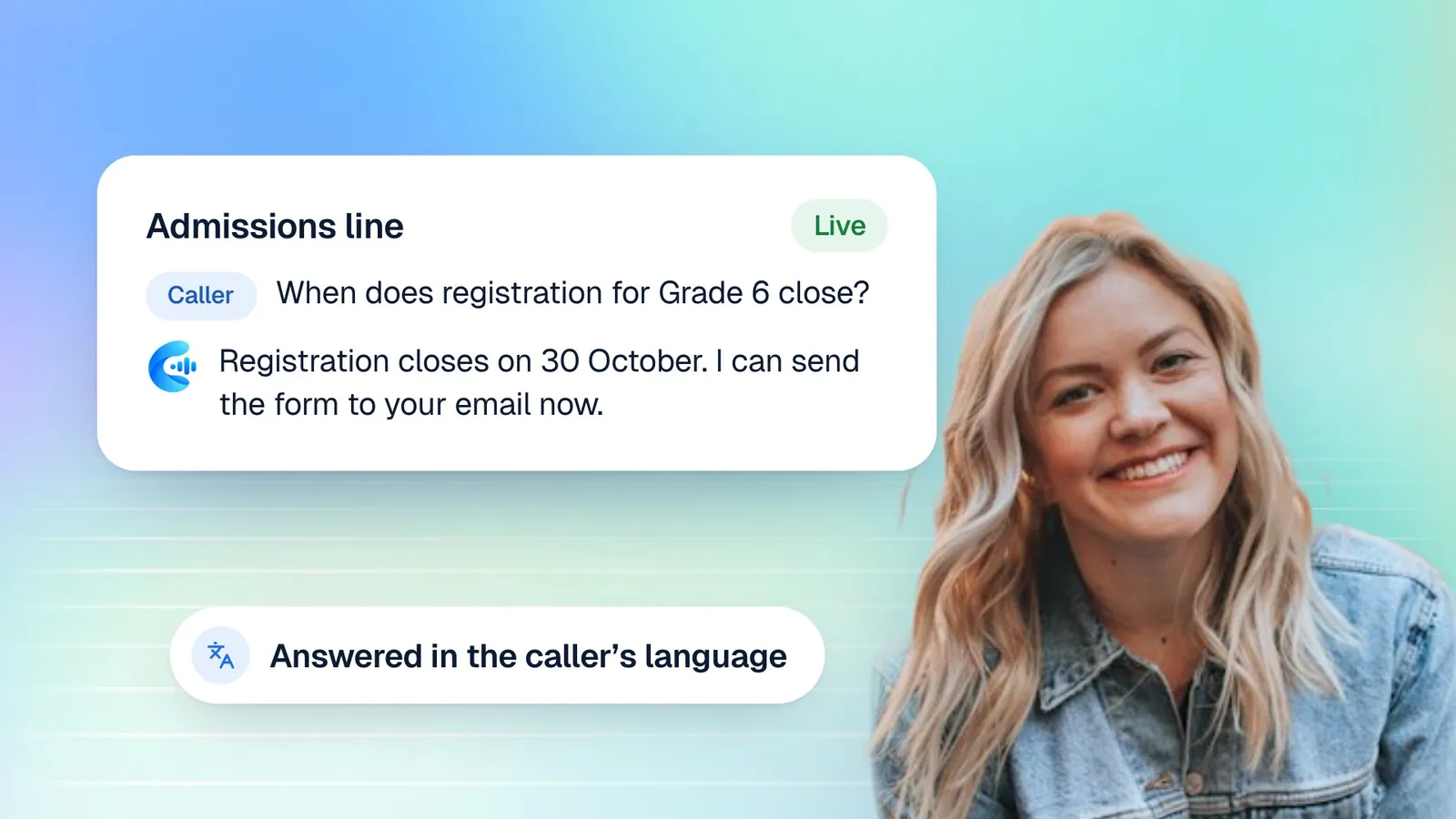
Parents call about admissions, fees, timings, transport and results. Many prefer to speak Urdu, while the school's information (class names, fee categories, document lists) is written in English. A bilingual agent answers admission questions in the language the parent uses, from the school's own documents, including after the office closes. Our post on voice agents for schools and nonprofits covers that setting in more depth.
Helplines and nonprofits
Nonprofit helplines often serve people who are under stress and who may be more comfortable in Urdu. An agent that answers immediately, in their language, can explain services, eligibility and next steps, and capture contact details so a staff member can follow up. It does not replace trained counsellors; it makes sure nobody reaches a busy signal or an unanswered phone.
Clinics
Patients call to ask about doctors' timings, fees and appointments. A bilingual agent can answer those questions and, with Cypher S switched on, book the appointment during the call. Clinical advice stays with clinicians: you can tell the agent which topics to avoid in its behaviour settings.
Clinics also benefit from the after-call record. Every call has a transcript and a recap, so the front desk can see in the morning which patients called overnight, what they asked and which appointments were booked, regardless of the language they used.
Shops and online stores
Customers ask about stock, delivery times, returns and payment options. These calls are short and frequent, and callers switch languages constantly because product names are in English. A bilingual agent handles them consistently, at any hour.
For shops, consistency is the main gain. Every caller hears the same return policy and the same delivery estimate, in the language they chose, instead of whatever the person on shift happened to remember.
Setting up a bilingual agent well
Turning on both languages is one click. Making the agent excellent in both takes a little more care.
- Pick English + Urdu in the wizard. Enter your business website and details as usual; the agent learns your business from both.
- Write a short greeting. One sentence, in the language most callers start with, that names your business and the agent.
- Add clear knowledge files. Prices, timings, policies and FAQs, written plainly. One topic per section and one answer per question.
- Include the words callers use. If customers refer to a service by an informal Urdu name, mention that name in your FAQ next to the official one.
- Set topics to avoid and a fallback. Tell the agent what not to discuss and what to say when it cannot help.
- Test in both languages, and in a mix. Ask your ten most common questions in English, then in Urdu, then the way a real caller would, switching halfway.
- Read the transcripts. Every test call lands in Calls with a transcript, so you can confirm the agent understood both languages correctly.
Numbers deserve special attention. Fees, dates and reference numbers are where misunderstandings cost the most, so test them in both languages and make sure the agent repeats key details back to the caller.
Involve the people who answer your phones today. They know which questions arrive in Urdu, which arrive in English and which phrases callers use for your services. Ask two or three of them to call the agent as if they were customers, in the way real customers speak, and to note anything that sounded unnatural. Their feedback is usually more useful than any checklist.
Finally, plan a review after the first week. Read a sample of call transcripts from both languages, look for questions the agent could not answer, and add those answers to your knowledge files. A bilingual agent improves the same way any agent does: through small, regular updates based on real calls.
Your human team: Cypher M in English and Urdu
Bilingual support does not stop at the agent. When a customer needs a callback from a person, Cypher M, the Cypher LM live call copilot, helps your team on that call.
Before the callback, Cypher M prepares a brief from every call that customer has had with your agent: what they wanted, what was promised and what is still open. During the call, it listens through the browser microphone and suggests answers, next steps and ways to handle objections, in English, Urdu or a mix. Speech is turned into text by the browser's speech service, which works in Chrome, Edge and Safari on a computer.
This means a new team member can take a callback in Urdu with the full context in front of them, without asking the customer to repeat everything they already told the agent.
Over time, the suggestions your team actually uses are collected in the Copilot library, grouped by playbook. That gives managers a practical record of what good answers sound like in both languages, which is useful material for training new staff and for improving the agent's own knowledge base.
Honest limits to plan around
Bilingual voice is strong, but it is worth knowing where the edges are today.
- Meeting bot captions. When Cypher M or the Cypher N note taker joins a Google Meet as a guest, it follows the meeting through Meet's live captions. Today that works best for meetings held in English. For Urdu conversations, use a copilot session with the browser microphone instead.
- Dialects and noise. Recognition is good, but strong background noise or very fast speech can still cause errors in any language. Encourage the agent to confirm important details.
- Mixed documents. If your knowledge base mixes languages within the same answer, keep it consistent. Clear, single-language passages produce clearer answers.
- Other languages. Agents are built for English, Urdu or both. If a large share of your callers use another language, talk to our team before you build.
None of these stops a bilingual agent from handling the everyday questions that make up most support calls. They simply tell you where to test carefully.
How this works in Cypher LM
Here is how a bilingual line comes together in the product.
- Wizard: choose English, Urdu or English + Urdu, set the agent's name, greeting and voice, and add your website and business details.
- Knowledge: upload PDFs, DOCX, CSV or TXT files, or import Google Docs and Sheets; the agent answers from the same files in either language.
- Channels: put the agent on your website with the widget, so customers can call (or chat) without downloading anything. Phone numbers are connected by our team on request.
- After the call: every call has a transcript and a recap with a summary, key points, action items and a follow-up draft, whichever language was spoken.
- Contacts: callers who share a phone number or email are grouped in Contacts, so a customer's history stays in one place.
- Copilot: Cypher M briefs your team before callbacks and suggests answers live, in English, Urdu or a mix.
Frequently asked questions
Does the caller need to choose a language at the start?
No. With English + Urdu selected, the agent understands either language from the first word and follows the caller if they switch during the call.
Do I need my knowledge base in both languages?
No. The agent answers from the same documents whichever language the caller uses. Many businesses keep their documents in English. Test your most important answers in Urdu before launch to be sure they come across clearly.
Can I have one English agent and one Urdu agent instead?
Yes. You can build as many agents as you need, each with its own language setting, knowledge and website placement. Most businesses find a single bilingual agent simpler, because callers rarely stick to one language.
Are call recaps written in Urdu when the call was in Urdu?
Every call gets a transcript and a recap with a summary, key points, action items and a follow-up draft. Review the recaps for your own calls to see how they read for your team, and read the transcript when you need the caller's exact words.
Is a bilingual agent suitable for a nonprofit helpline?
It is well suited to answering questions about services, eligibility and next steps, and to capturing details for a follow-up. It should not replace trained staff for sensitive conversations; set clear topics to avoid and a fallback that points callers to the right person.
Conclusion: speak the way your customers speak
Customers do not change how they talk because they are calling a business. A support line that understands English, Urdu and every mix in between removes friction from every call, and tells customers that you know who they are.
Start with the questions your callers ask most, test them in both languages, and let your recaps show you where to improve.
You can build a bilingual agent in minutes. Start a free trial, choose English + Urdu in the wizard, and make your first test call in both languages. Or book a demo to hear one in action.